Choosing the China Best Small Felt Storage Basket for wholesale requires more than comparing prices. Buyers need to examine material quality, production consistency, packaging, and supplier communication. A basket may look attractive in a product photo. However, uneven stitching or weak handles can appear after only a few uses. Wholesale customers expect dependable performance.
Professional organizer and author Shira Gill says, “The goal is not to create a perfect home, but a home that supports the life you want to live.” This idea also applies to storage products. A Small Felt Storage Basket should support real routines, not merely fill a catalog page. It should fit shelves, nursery units, office drawers, or bathroom corners without wasting space. Its felt should feel firm but flexible. Its seams should remain neat when the basket is folded, shipped, and reopened.
China remains a major sourcing market for felt storage products. Many factories offer custom colors, logos, dimensions, and packaging. That flexibility is valuable for retailers and distributors. Still, supplier claims need practical checking. Request samples. Measure the basket yourself. Test the handles with a realistic load. Inspect odor, fabric density, stitching, and carton protection.
Some buyers focus too heavily on the lowest quotation. That can be a costly mistake. A cheaper basket may create higher returns, weaker reviews, or slower sales. The better choice balances unit cost, useful capacity, appearance, and repeatable quality. No supplier is perfect. Even experienced buyers can overlook small defects. Careful sampling and honest comparison remain essential when selecting the best Small Felt Storage Basket for wholesale.
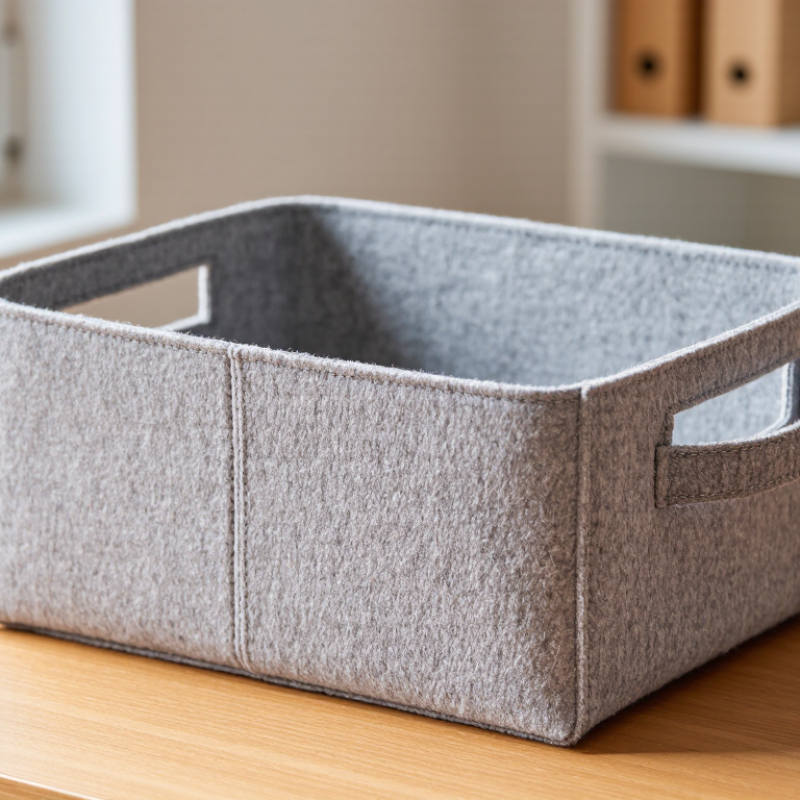
China Best Small Felt Storage Basket for Wholesale?
What Makes Felt Storage Baskets Ideal for Wholesale
Felt storage baskets suit wholesale because they are lightweight, stackable, and easy to display. Their soft surface protects shelves, toys, clothing, and office supplies from scratches. During product inspections, buyers should check stitching, edge binding, handle strength, and fabric density. These small details often separate dependable inventory from attractive samples.
Wholesale buyers also value flexible sizing and practical color options. Neutral shades usually fit bedrooms, nurseries, retail counters, and workspaces. Custom labels, dimensions, and packaging can support different sales channels without changing the basket’s basic function. Felt folds efficiently, which may reduce storage space and shipping pressure. It is not always the cheapest choice.
Material consistency matters more than a low sample price. Ask suppliers for clear measurements, weight tolerance, packing details, and repeat-order procedures. A reliable manufacturer should explain how defects are controlled before shipment. Buyers can request pre-production samples and inspect random cartons after production. This approach reveals uneven seams, loose fibers, or odor issues early.
No basket fits every market. Some customers prefer rigid walls, while others want softer, foldable designs. Felt can also collect dust if the surface is too loose. That weakness deserves attention. Testing the basket with real products, shelf conditions, and handling routines gives wholesalers more useful evidence than photographs alone.
| Wholesale Dimension | Typical Product Information | Why It Matters to Wholesale Buyers | Recommended Evaluation Point |
|---|---|---|---|
| Material | Polyester felt or recycled polyester felt; common felt densities range from approximately 2 to 5 mm in thickness. | Felt is lightweight, flexible, and less likely to scratch furniture or stored items than rigid plastic or metal. | Confirm fiber composition, thickness tolerance, surface consistency, and recycled-content documentation when required. |
| Small Basket Size | Common small formats include approximately 20 × 15 × 10 cm, 25 × 18 × 12 cm, and 30 × 20 × 15 cm. | Compact dimensions suit shelves, desks, wardrobes, nursery storage, and small retail packaging programs. | Match the basket size to the intended contents and verify internal usable dimensions rather than only external dimensions. |
| Product Weight | A small felt basket commonly weighs about 100–350 g, depending on size, wall thickness, handles, and reinforcement. | Low weight can reduce freight cost per unit and make the product easier for consumers to carry and rearrange. | Request a measured sample weight and calculate packed weight, carton weight, and shipping volume together. |
| Foldability | Many felt baskets can be folded flat or partially collapsed when they do not contain rigid inserts. | Flat packing can reduce storage requirements and improve container or carton utilization during transportation. | Check whether repeated folding causes creasing, edge deformation, or loss of shape after unpacking. |
| Structure | Shape retention may be provided by layered felt, stitched seams, binding tape, bottom panels, or removable inserts. | A stable structure improves shelf presentation and helps the basket remain functional during everyday use. | Inspect corner strength, base support, handle attachment, and recovery after compression. |
| Storage Capacity | Small baskets are generally suitable for accessories, toys, stationery, cosmetics, cables, towels, and other lightweight household items. | Versatile use expands the potential customer base and supports sales across home, office, nursery, and gift categories. | Define the intended load limit and avoid presenting a soft felt basket as suitable for heavy tools or sharp objects. |
| Color Options | Common colors include grey, black, beige, white, brown, navy, and muted pastel shades. | A broad neutral palette supports different interior styles and can simplify assortment planning for retailers. | Approve a physical color sample because lighting, screen settings, and recycled fibers can affect visual color consistency. |
| Customization | Typical options include size, color, handle shape, stitching, labels, printed artwork, and packaging configuration. | Customization allows wholesalers to create differentiated assortments without changing the basic storage function. | Confirm artwork format, color matching method, sample approval procedure, and any additional tooling or setup charges. |
| Surface Performance | Felt can collect lint and dust; light surface cleaning is generally more suitable than aggressive washing. | Clear care instructions help reduce customer complaints and protect the appearance of the product in retail use. | Check pilling, color transfer, odor, loose fibers, and cleaning instructions before approving bulk production. |
| Packaging Efficiency | Nested or folded baskets can occupy less space than rigid storage containers of similar usable capacity. | Efficient packing can lower carton volume and make mixed-size wholesale shipments easier to organize. | Compare carton dimensions, units per carton, gross weight, drop protection, and retail-ready packaging needs. |
| Quality Control | Important checks include dimensions, stitching, color, shape, odor, surface defects, handle strength, and packaging condition. | Consistent quality is essential when ordering repeated batches or supplying multiple retail locations. | Use an approved sample, written tolerances, pre-shipment inspection criteria, and a documented defect classification. |
| Wholesale Cost Factors | Unit pricing is influenced by felt thickness, basket size, construction, customization, packaging, order quantity, and shipping terms. | Evaluating total landed cost gives a more accurate view of profitability than comparing unit prices alone. | Request a quotation that separates product price, customization, packaging, inspection, freight, and applicable duties. |
| Sustainability Considerations | Some felt products use recycled polyester, while others use virgin polyester; both require verification from product documentation. | Material transparency supports responsible purchasing and helps retailers communicate accurate product information. | Ask for fiber-content details, recycled-material evidence where applicable, packaging composition, and care guidance. |
| Best Wholesale Fit | Small, lightweight, foldable felt baskets with stable construction and neutral colors. | They combine broad household appeal, efficient storage, manageable shipping volume, and flexible merchandising. | Prioritize consistent quality, practical dimensions, dependable packaging, and a clearly defined inspection standard. |
Press the felt between two fingers. Dense felt should recover quickly and resist tearing around the rim. Check for bald patches, loose strands, and uneven thickness. A strong chemical odor requires further testing. Ask for fiber composition and production specifications in writing.
Measure the length, width, and height after filling the basket. Do not rely on empty measurements alone. Test folded towels, toys, or office supplies inside. Leave clearance for easy removal. Folded sides can reduce usable space.
Load each handle with practical weight for several minutes. Reinforced handles should not stretch or pull the seams. Inspect the base, corner stitching, edge binding, and supporting insert. Some baskets look firm in photos. They can collapse during daily use.
A digital preview may look perfect, yet physical samples can reveal weak stitching. Request samples, packing details, and inspection records. Recheck random units before accepting a large order. One successful test is not enough.
Confirm size, color, handle style, label position, and packaging. A 25 × 18 × 12 centimeter basket may suit desk accessories. Deeper designs can hold children’s items. Felt thickness affects structure, weight, and shipping costs.
Options include woven labels, printed marks, embroidered details, paper inserts, and custom sleeves. Each method changes texture and cost. A simple mark often looks cleaner on soft felt. Too many details may make the basket look crowded.
Request a physical sample with the selected color and packaging. Review it under store lighting and beside similar products. Screens may show colors inaccurately. Approve a physical color reference. Clear artwork files and written measurements reduce avoidable mistakes.
Discuss minimum order quantities, sample charges, production schedules, carton dimensions, and inspection procedures. Ask how the baskets are packed and stacked. Check shape recovery afterward. Not every sample succeeds. That deserves another review.
A Small Felt Storage Basket is an practical wholesale product because it combines lightweight construction, soft texture, and versatile storage functionality. Made primarily from durable felt or recycled fiber materials, it can help organize toys, clothing, office supplies, toiletries, and household accessories while protecting stored items from scratches. Wholesale buyers should evaluate fabric density, stitching quality, edge finishing, handle strength, shape retention, and resistance to wear. Available sizes and compartment designs should match the intended market and storage needs, with foldable structures offering easier shipping and space-saving benefits.
Customization can add value through selected colors, dimensions, patterns, labels, packaging, and other branding elements. Before placing a bulk order, buyers should review samples, confirm production capacity, discuss minimum order quantities, and verify quality-control procedures. A reliable supplier should communicate clearly, provide consistent specifications, meet agreed delivery schedules, support customization responsibly, and offer transparent pricing. These factors help wholesalers develop a practical, attractive, and market-ready storage collection.

 Ulike Felt