How to Choose the Best Felt Woven Basket?

Time:2026-10-12 Author:Aria
0%

Choosing the right Felt Woven Basket requires more than matching colors with a living room. It involves material quality, construction, safety, capacity, and everyday use.

Grand View Research reports that the global felt market is expanding, supported by demand for durable, lightweight, and versatile textile products. The report also identifies home furnishings as an important application area. Fortune Business Insights has similarly noted continued growth in the global home décor market, where storage products increasingly combine function with visual appeal.

Look closely at the fibers.

A dependable Felt Woven Basket should feel firm, not limp, when lifted by its handles. Dense weaving usually supports better shape retention, while reinforced seams reduce stretching during repeated use. A basket for children’s toys needs soft edges and stable construction. A laundry basket needs greater capacity and stronger handles. These details are easy to overlook.

Don Norman, a leading design expert, explains, “Design is really an act of communication.” His point matters here: a basket should clearly communicate its purpose through size, structure, texture, and accessibility.

Sustainability also deserves careful attention. Recycled felt may reduce reliance on virgin materials, but buyers should still check fiber content, dyes, stitching, and manufacturing transparency. “Eco-friendly” is not a complete quality test.

Practical experience can expose weaknesses quickly. Place books inside. Pull the handles gently. Inspect the base after several minutes. A beautiful basket may still collapse under ordinary weight. That is the part many product descriptions fail to explain.

The sections ahead examine how to compare Felt Woven Basket designs, materials, dimensions, craftsmanship, maintenance needs, and supplier reliability before making a confident purchase.
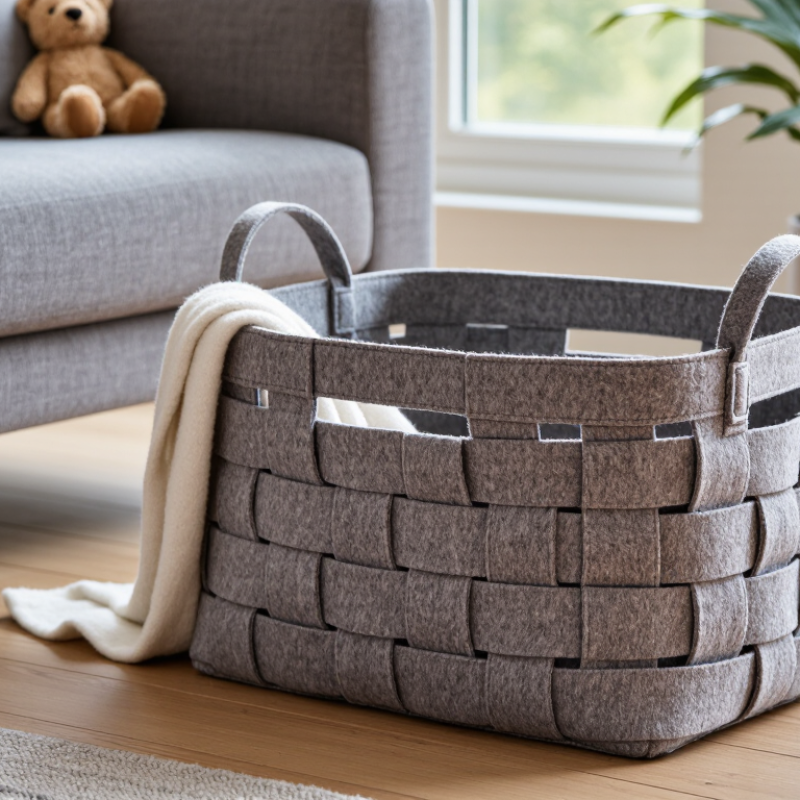
How to Choose the Best Felt Woven Basket?

Define Your Storage Needs and Intended Use

How to Choose the Best Felt Woven Basket?

Define Your Storage Needs and Intended Use

Choosing a felt woven basket starts with an honest look at what you need to store. A basket for soft blankets needs different support than one for children’s books. Measure the shelf, cabinet, or floor space before shopping. Write down the longest item you expect to place inside. This simple step prevents awkward overfilling.

Consider the basket’s daily job. For laundry, choose a deep shape with reinforced handles and a flexible, comfortable rim. For toys, a wide opening makes cleaning faster and helps children see their options. Small baskets suit keys, cables, or folded scarves. Felt can protect delicate surfaces, but it may not resist heavy moisture or sharp objects well. Keep that limitation in mind.

Think about weight, access, and cleaning habits. If you will move the basket often, test whether the handles feel secure when loaded. A structured base helps books stand upright, while softer sides work well for clothing. I once chose a beautiful basket that was too deep; small items disappeared at the bottom. That mistake changed how I judge storage. Appearance matters, but reachability matters more. Check stitching, edge finishing, and fiber density under good light. A loose seam may worsen with repeated use. Also consider where the basket will live. A dry bedroom is kinder to felt than a damp utility area. You may need another material there.

Compare Felt Materials, Weave Quality, and Durability

How to Choose the Best Felt Woven Basket?

Felt quality begins with the fiber, not the color. Wool felt usually feels warmer, denser, and more resilient than thin synthetic felt. Recycled polyester felt can resist moisture better, but its surface may pill with frequent handling. Press the side gently between your fingers. A strong basket should recover its shape instead of staying creased. Check the edge, too. Rough fibers or uneven thickness often reveal weak material.

Weave quality deserves close attention. Some felt baskets use woven panels, while others use layered felt with decorative stitching. Look inside the basket for consistent thread spacing and firm, clean seams. Loose stitches can widen when the basket carries books, toys, or folded clothing. The handles should connect through reinforced patches, not just a single line of thread. Small details matter.

I once trusted a thick-looking basket that sagged after repeated loading. The felt was dense, but the base lacked support.

Durability depends on structure as much as material. A flat, reinforced bottom helps the basket stand on a shelf and prevents corner stress. Slight flexibility is useful, yet excessive softness can signal poor construction. Test the empty basket, then add a few household items and lift it carefully. Watch for twisting, stretched handles, or a collapsing rim. Moisture resistance also varies, so avoid assuming every felt basket is washable. A damp cloth may be safer than soaking it, although care instructions should guide that choice. Surface appearance can mislead. Examine the construction.

Choose the Right Basket Size, Shape, and Capacity

Choosing the right felt woven basket starts with its intended location. Measure the shelf, cabinet, or floor space before shopping. Leave a few centimeters for easy removal. A basket that fits tightly may look neat, but daily use becomes frustrating.

Size should match the items, not only the available space. A 30-centimeter basket can hold scarves, toys, or folded towels. A deeper basket works better for blankets, but it becomes heavy quickly. Check the base width and height together. A narrow, tall shape saves floor space, while a wide basket offers easier access. My first choice was too small. It looked tidy, but the contents overflowed within days.

Capacity also depends on weight and structure. Felt can protect delicate objects, yet it may bend under heavy books or storage tools. Look for reinforced handles, firm stitching, and a stable bottom. A medium basket often works well for daily household items, but avoid filling it beyond comfortable lifting weight. Test how the basket feels when full. This simple step is easy to miss. For children’s rooms, choose a lightweight shape with a wide opening. For shelves, select a lower profile that slides out smoothly. Measurements help, but real handling matters more.

How to Choose the Best Felt Woven Basket? - Choose the Right Basket Size, Shape, and Capacity

Dimensions are approximate external measurements. Capacity is an estimated usable volume based on the basket's internal space; tapered walls, handles, lining, and reinforcement may reduce the practical capacity.
Basket Size Recommended Shape Typical External Dimensions Estimated Capacity Best For Placement Recommendation Key Selection Tip
Extra Small Round or square 20–25 cm wide
12–15 cm deep
12–15 cm high
3–6 L Remote controls, keys, cosmetics, small accessories, and office supplies Desk, shelf, entryway console, or bedside table Choose a compact footprint when the basket is mainly for small items that need to remain visible.
Small Round, oval, or rectangular 25–30 cm wide
18–22 cm deep
15–20 cm high
6–12 L Hand towels, baby accessories, toys, scarves, and small craft materials Bathroom shelf, nursery, open shelving, or under a side table Oval baskets offer useful length while taking up less depth than a rectangular basket.
Medium Rectangular or square 30–38 cm wide
22–28 cm deep
18–25 cm high
12–22 L Folded clothing, books, toys, blankets, towels, and everyday household items Cube shelving, wardrobe shelves, living-room storage, or under a desk Measure the shelf opening first; leave at least 1–2 cm of clearance on each side for easy removal.
Large Rectangular or oval 38–45 cm wide
28–35 cm deep
25–32 cm high
22–40 L Large toys, laundry, cushions, folded blankets, seasonal clothing, and pet accessories Floor, wardrobe base, open storage unit, or beside a sofa Use a reinforced base and sturdy handles when the basket will be moved frequently or filled with dense items.
Extra Large Rectangular or tall round 45–60 cm wide
32–42 cm deep
30–45 cm high
40–75 L Bulky blankets, large toys, laundry, winter accessories, and lightweight household textiles Floor storage, utility room, bedroom corner, or large open shelving Check doorway, shelf, and cabinet clearance before choosing this size; avoid overfilling to preserve the shape.
Long and Low Rectangular or oval 45–70 cm wide
20–30 cm deep
15–22 cm high
15–30 L Shoes, scarves, yoga accessories, blankets, magazines, and sofa or entryway items Under benches, beneath console tables, at the foot of a bed, or on low shelves This shape maximizes horizontal storage while keeping the basket easy to reach.
Tall and Narrow Round or rectangular 25–35 cm wide
25–35 cm deep
35–50 cm high
20–45 L Umbrellas, wrapping paper, craft rolls, toys, laundry, and tall household items Unused corners, beside wardrobes, entryways, or narrow gaps between furniture Choose a stable base and a wider lower section to reduce the risk of tipping.
Quick Selection Checklist
Measure the space:
Record the available width, depth, and height, then allow clearance for handles and removal.
Estimate the contents:
Select a capacity approximately 15–25% larger than the current volume to allow comfortable access.
Match the shape:
Use rectangular baskets for shelves, oval baskets for narrow spaces, and round baskets for corners or open floor placement.

Evaluate Handles, Structure, and Ease of Maintenance

How to Choose the Best Felt Woven Basket?

Evaluate Handles, Structure, and Ease of Maintenance

A felt woven basket should feel comfortable before it looks attractive. I usually lift an empty basket, then add books or folded towels to test its handles. Handles should attach securely at reinforced points, without sharp stitching or loose threads. They should also offer enough room for your fingers. Test them in person. Short handles may look neat, but they can feel awkward during daily use.

The basket’s structure matters just as much. Press the sides gently and inspect how quickly they recover. A reliable basket should hold its shape without feeling stiff or brittle. Check the base, rim, and inner seams for even construction. A wide, stable base helps prevent tipping on shelves or floors. I once chose a soft basket that looked elegant, but it collapsed under ordinary storage. That mistake changed how I judge support.

Maintenance can determine whether the basket remains useful. Look for removable liners or surfaces that allow gentle vacuuming. Felt usually responds well to low-suction cleaning and careful spot treatment. Avoid soaking it, since excess water may distort the fibers or create slow-drying odors. Let it dry completely in a ventilated place. Always follow the care label when available. Darker colors may hide dust, not eliminate it. A practical basket needs regular attention, especially in homes with children, pets, or frequent handling.

Match Colors and Designs with Your Home Décor

A felt woven basket should support your room’s color story, not compete with it. Start by sampling three nearby tones from the space: one wall color, one textile color, and one wood or metal finish. For a calm bedroom, try oatmeal felt with warm oak and muted sage. In a darker study, charcoal or deep olive can echo shelving without making the corner feel heavy. Texture matters too. A visible weave softens sharp furniture lines and adds visual depth.

Material safety still deserves attention. The U.S. Environmental Protection Agency reports that indoor pollutant levels can be two to five times higher than outdoor levels. Choose low-odor felt, ask about fiber treatment, and provide ventilation after unpacking. A basket used for blankets needs breathable construction. A tighter weave suits toys or magazines. I once matched a basket to a rug too precisely, and the room looked strangely flat. A small contrast would have worked better.

Tips:

Place a basket beside the furniture it serves.

Compare colors in daylight and evening light.

Keep one design feature imperfect; handmade variation can make the room feel lived-in.

If your décor already has bold patterns, choose a simple basket shape and one quiet color.

If the room feels plain, select a basket with mixed fibers or a restrained geometric weave.

According to a 2024 professional wellness-design report, natural materials remain closely connected with comfort-focused interiors. The tactile choice may matter as much as the color.

FAQS

How can I judge felt quality before buying a woven basket?

Press the side gently. Strong felt should recover quickly instead of staying creased. Wool felt often feels warmer and denser. Synthetic felt may resist moisture better but pill over time.

What should I inspect inside the basket?

Check thread spacing, inner seams, and edge thickness. Clean, firm stitching suggests better construction. Loose stitches may widen under books, toys, or clothing.

Why does the basket’s base matter?

A flat, reinforced base helps the basket stand steadily. It also reduces stress around the corners. Dense felt alone cannot prevent sagging.

How can I test the handles?

Lift the empty basket, then add books or folded towels. Watch for stretched handles or twisting. Reinforced attachment points are safer than one simple line of thread.

What handle details affect daily comfort?

Handles should leave room for your fingers. Short handles may look tidy but feel awkward. Check for sharp stitching and loose threads.

How do I test the basket’s overall structure?

Press the sides gently and watch their recovery. Add a few household items, then lift carefully. The rim should not collapse. No test is perfect.

Are felt baskets washable?

Do not assume that. A damp cloth is often safer than soaking. Excess water can distort fibers or create slow-drying odors. Follow the care label when available.

How should I maintain a felt woven basket?

Use low-suction cleaning and gentle spot treatment. Let the basket dry completely in a ventilated place. Dark colors can hide dust, not remove it.

Can appearance alone show durability?

Not reliably. A thick-looking basket may still sag without base support. I once judged one incorrectly. Construction deserves more attention than surface appearance.

Conclusion

Choosing the best Felt Woven Basket starts with understanding your storage needs and intended use. Consider whether you need it for blankets, toys, laundry, books, or small household items, then select a material that offers the right balance of softness, strength, and durability. Examine the quality of the weave, stitching, and overall construction to ensure the basket can handle regular use without losing its shape. Size, shape, and capacity should also match both the items you plan to store and the available space in your room.

Practical features can make a basket easier to use. Sturdy handles improve portability, while a firm structure helps it remain attractive and functional over time. Choose materials that are simple to clean and maintain, especially for busy areas. Finally, consider colors, patterns, and decorative details that complement your existing home décor. A thoughtfully selected Felt Woven Basket can provide useful organization while adding warmth, texture, and visual appeal to your living space.


Aria

Aria

Aria is a dedicated marketing professional with a deep passion for innovative strategies and a keen understanding of our company's product offerings. With a wealth of experience in the industry, Aria excels at crafting engaging content that highlights the unique features and benefits of our......