A Gray Felt Storage Bin can make an open shelf look calmer while keeping blankets, toys, or paperwork within reach. But appearance is only part of the decision. The right bin should fit its space, carry its contents comfortably, and hold its shape during regular use. Looks tidy. Still, felt thickness, stitching, handles, and construction can differ from one product to another. A soft-sided bin may work well for scarves but sag under heavier books. That trade-off is easy to miss in a product photo.
These seven tips will help you compare bins using practical details rather than color alone. Measure the shelf or closet before shopping, then check the bin’s dimensions and usable interior space. Consider how often you will lift it, what it needs to hold, and whether its handles feel secure. Look closely at seams and base support, since those areas take repeated strain. Also think about cleaning: felt can collect dust, and care instructions vary by material. A gray finish may blend beautifully with neutral décor, yet it can show lint in bright rooms. There is no perfect choice for every home. The best option balances fit, function, and upkeep for your actual routine, not an idealized display. A little careful checking now can prevent a bin that looks right but disappoints after a few weeks.
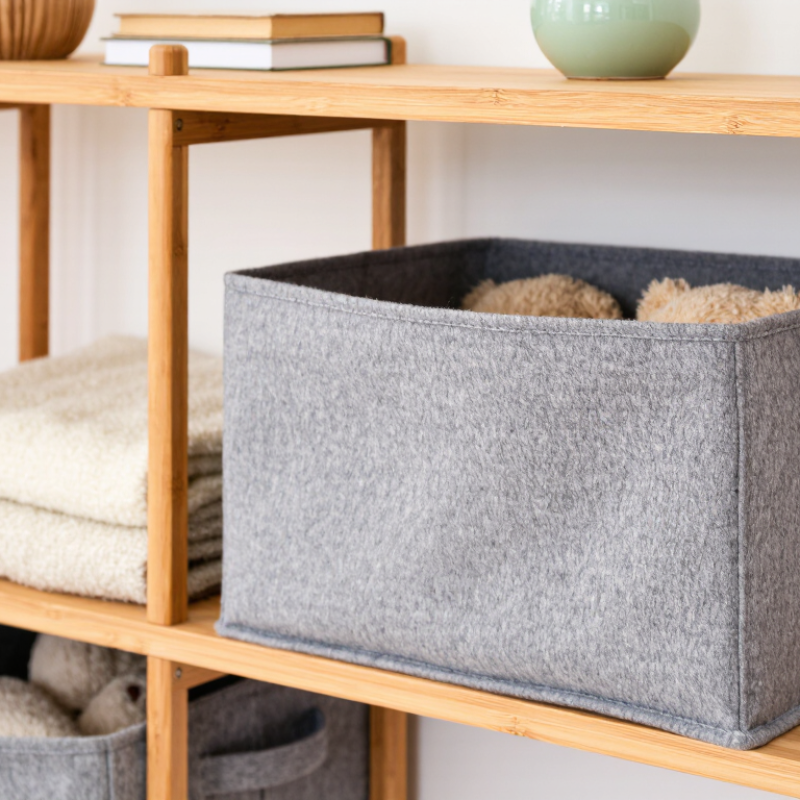
Before choosing a gray felt storage bin, decide what it will hold and where it will live. A bin for soft scarves needs less structure than one for books or pantry supplies. Measure the shelf, drawer, or cubby, then leave a little clearance for easy removal. Check the item’s weight, too. Felt can soften or sag under heavy loads, especially when the bin has no rigid base. For everyday use, consider handles you can grip with one hand. For open shelves, choose a size that keeps contents visible and reachable. Small details matter.
Clutter is common, but the right fix depends on the items causing it. A 2015 survey by the National Association of Professional Organizers reported that 54% of respondents felt overwhelmed by clutter. That is a useful reminder to sort before buying storage. Group similar items, estimate their volume, and choose a bin that fits the actual pile—not an imagined tidy version. I sometimes choose by color first. That is backwards. Gray felt may blend neatly with a room, but it will not make an oversized bin practical. For toys, add room for quick drop-ins; for documents, use a firm-sided bin that keeps edges from bending. Check care instructions if dust or spills are likely. Great-looking storage still needs a real job.
| Tip | Storage Need | Suggested Bin Size | Useful Features | Fit Check |
|---|---|---|---|---|
| 1 | Small everyday items, such as chargers, remotes, or stationery | Small: about 20–25 cm wide, 15–20 cm deep, and 10–15 cm high | Open top, low sides, and a compact shape that fits on a desk or shelf | Check that frequently used items are easy to reach without removing the bin. |
| 2 | Folded clothing, towels, or linens | Medium: about 30–35 cm wide, 25–30 cm deep, and 20–25 cm high | Rectangular shape, reinforced sides, and handles for lifting | Measure the shelf or closet opening, including its usable depth and height. |
| 3 | Toys, craft supplies, or other bulky household items | Large: about 35–40 cm wide, 30–35 cm deep, and 25–30 cm high | Wide opening, sturdy base, and handles that remain comfortable when loaded | Allow extra room for irregularly shaped items; do not rely on the bin to compress them. |
| 4 | Under-bed storage for seasonal clothing or spare bedding | Low profile: roughly 50–60 cm long, 35–45 cm wide, and 15–20 cm high | Low sides, easy-grip handles, and a shape that slides in and out smoothly | Measure from the floor to the lowest bed frame point and leave clearance for movement. |
| 5 | Shelf or cubby organization | Choose a bin slightly smaller than the shelf opening; common cubby widths are around 30–33 cm | Straight sides, a stable base, and dimensions suited to the specific cubby | Measure the opening at its narrowest point and allow a little clearance on each side. |
| 6 | Items that need frequent carrying between rooms | Small to medium, sized so the loaded bin can be lifted comfortably | Reinforced handles, flexible construction, and a firm bottom panel | Consider the weight of the contents as well as the bin; felt bins are generally best for lightweight storage. |
| 7 | Visible storage in a living room, bedroom, or home office | Select the size that fits the intended spot without blocking walkways or nearby furniture | Neutral gray tone, clean seams, and a shape that coordinates with the room | Check the bin’s care instructions and keep felt away from damp areas unless it is specified as moisture-resistant. |
Size ranges are practical starting points. Confirm the bin’s external dimensions against the available space and the items you plan to store.
Measure the shelf, drawer, or cubby, then leave a little clearance. Fit the real pile, not an imagined tidy version.
Felt may sag under books or pantry supplies, especially without a rigid base. Check how firm the sides and bottom feel. Some bins may disappoint.
Scarves, blankets, and toys are lighter choices. A wide opening makes quick drop-ins easier.
Look at their placement and stitching. Add a few folded towels, lift the bin, and watch for sagging or uneven pulling. I sometimes forget this.
No. Lighting can make gray look warm, cool, or nearly charcoal. Compare a sample with nearby shelves and flooring.
Choose a firm-sided bin that supports paper edges. Avoid filling a soft bin with a tall stack of files.
Not always. Check the care instructions, especially if dust or spills are likely. Some surfaces allow spot-cleaning.
A stable base, smooth seams, and reachable contents help. Handles you can grip with one hand matter. Small things add up.
Choosing the right Gray Felt Storage Bin starts with understanding what you plan to store and where you will use it. Consider whether it will hold clothing, toys, linens, or everyday household items, then measure the available shelf, closet, or floor space before selecting a size. A bin that fits its contents and surroundings will be easier to use and help keep the area organized.
Next, compare the felt’s thickness and overall construction to find a bin that can handle regular use while retaining its shape. Consider useful details such as a color that suits your room, sturdy handles for carrying, and a design that fits your storage routine. Finally, check the care instructions and weigh the bin’s expected durability against its price. These considerations can help you choose a practical option that looks neat, fits your space, and offers lasting value.

 Ulike Felt