Choosing the right Felt Basket With Lid can change how a room feels and functions. These baskets hide clutter, protect contents from dust, and add soft texture to shelves, bedrooms, nurseries, and offices. Yet not every design suits every purpose. A shallow basket may look elegant but hold fewer blankets. A rigid felt box may stack well but feel less flexible during daily use.
This guide explores ten practical types, including collapsible baskets, woven felt baskets, toy storage baskets, laundry hampers, nursery organizers, and lidded storage cubes. Each type will be considered through real use factors. These include material density, lid fit, handle strength, stitching, interior capacity, cleaning ease, and storage stability. Small details matter. A loose lid can expose carefully stored items. A weak handle may fail when carrying books or folded towels.
The discussion is based on common home-organization experience and product evaluation principles. We will compare how each basket performs in realistic settings, from a narrow apartment shelf to a busy family room. Appearance matters, but it should not replace durability or safety. Some felt products may vary in thickness, shape, or odor after unpacking. That deserves honest attention. No basket is perfect. The best choice depends on what you store, how often you move it, and how much maintenance you accept. By examining these ten types carefully, readers can make a more confident and practical purchase decision.
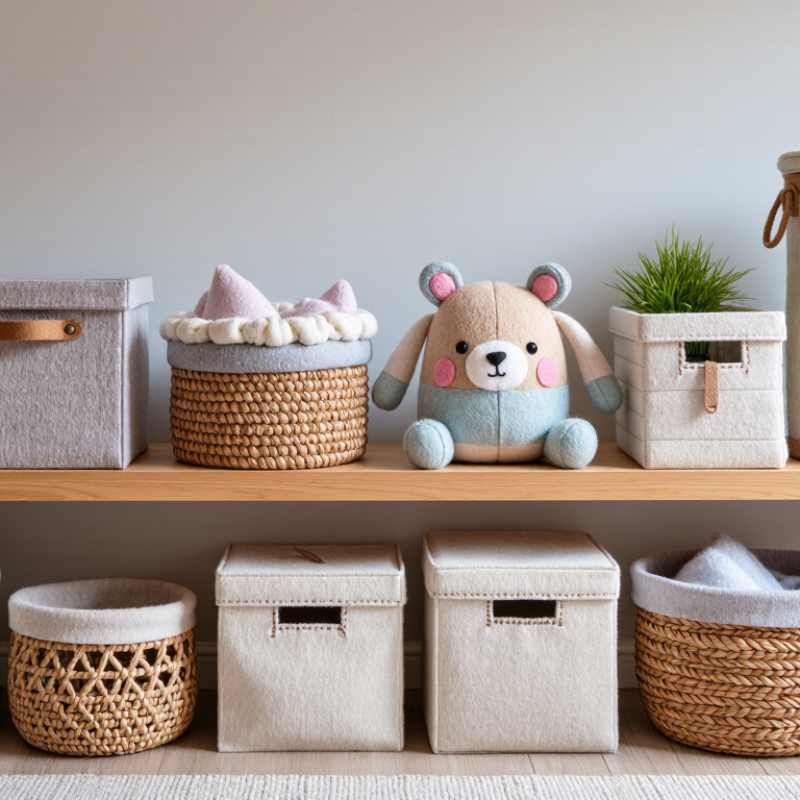
What Are the Top 10 Felt Basket With Lid Types?
Felt Baskets With Lids: Definition and Key Structural Features
A felt basket with a lid is a soft-sided storage container whose cover rests over, folds across, or attaches to its rim. Many designs use pressed wool fibers or polyester felt. The body usually has stitched side panels, a reinforced base, and handles cut into or sewn onto the walls. Simple construction. The lid may be a separate panel, a hinged flap, or a close-fitting top. Its shape and edge finish affect how well it stays in place.
Material context matters. Textile Exchange’s Materials Market Report 2024 estimates that global fiber production reached 124 million tonnes in 2023. This is a broad industry figure, not a measure of felt-basket sales. Still, fiber choice affects a basket’s feel, stiffness, and care needs. A thicker base can help hold folded towels upright, while a flexible lid may sag when lightly loaded. I would check the seams and lid fit in person when possible; product descriptions do not always show how the basket behaves when full.
Tips: Match the lid style to the contents. A flap allows quick access; a fitted lid hides clutter more completely. Check the rim for a firm edge and lift the basket by its handles. Small details matter. A loose seam can change the shape over time.
Felt Baskets With Lids: Definition and Key Structural Features
A felt basket with a lid is a soft-sided storage container with a fitted or attached cover. The chart compares representative lid or cover piece counts—not sales or market data. Actual construction can vary by design.
A useful comparison of felt baskets with lids starts with measurable criteria, not appearance alone. Record outer width, depth, height, usable volume, and empty weight; a tall hamper and a shallow shelf basket serve different tasks. Then compare lid style: hinged, lift-off, fold-over, drawstring, or divided lid. Check whether it opens one-handed and sits flat when loaded. Small details matter.
Material and structure shape the ranking, too. Note whether the felt is wool, recycled fiber, or synthetic, and whether walls are single-layer, reinforced, or supported by a base insert. Textile Exchange’s Materials Market Report 2024 estimates global fiber production reached 124 million tonnes in 2023. That figure is not basket-specific, but it underscores why fiber origin deserves scrutiny. For durability, compare seam finish, handle attachment, and resistance to sagging; standardized textile strength and abrasion tests can support claims, though many product listings omit test results. Ask for them.
For a practical top-ten list, score each type against the same use case: nursery storage, laundry, toys, or closet organization. Include collapsible hampers, lidded cubes, round baskets, tall narrow baskets, divided organizers, and handled bins, among others. My ranking would still be imperfect: empty-basket photos rarely reveal how a lid behaves with a full load. Check dimensions in person when possible.
Felt baskets with lids fall into ten useful types: round, square, rectangular, collapsible, handled, nursery, toy-storage, laundry, shelf-sized, and under-bed designs. Their shapes suit different spaces. Round baskets soften a bedside corner, while rectangular versions fit narrow shelves. Grand View Research valued the global home décor market at USD 681.1 billion in 2022 and projected 4.5% annual growth through 2030. This broad market figure is not specific to felt baskets, but it reflects continued interest in functional home furnishings.
Design details affect everyday use. A firm lid hides toys or spare linens; a flexible lid is easier to lift with one hand. Handles help move laundry, though thin felt can sag when the basket is heavily loaded.
Collapsible styles save cupboard space, but they may lose shape if stored folded for long periods. Nursery and shelf-sized baskets work best when their dimensions match the items and available space.
Small details matter. Still, felt is not automatically durable: stitching, base reinforcement, and lid fit vary between products, and that deserves closer inspection.
Tips: Measure the shelf or storage gap before choosing. Check whether the lid opens fully without hitting a wall, and test the handles with a realistic load. For small toys, choose a stable base and a lid children can lift easily.
Felt baskets with lids differ most in fiber, closure, and how the walls hold their shape. Common materials include dense polyester felt, wool felt, and blended felt; recycled content may also be specified. Textile Exchange’s 2024 Materials Market Report estimates that recycled polyester made up about 12% of global polyester production in 2023. That figure describes the fiber market, not basket composition, so check product labels before assuming a basket contains recycled material. Feel the edge, too: a firm, even cut usually signals more consistent panel thickness.
Ten useful lid styles include hinged, lift-off, fitted, flap, roll-top, drawstring, snap-fastened, magnetic, tied, and collapsible designs. Lift-off lids keep the opening broad, but can slide when a basket is moved. Hinged lids stay attached, though their seams may take more strain. Flaps and roll-tops suit soft, flexible walls; snaps and magnets need reinforced contact points. Small detail. A closure that works well on a shelf may feel awkward when the basket sits under a bed.
Construction changes daily use. Single-layer felt is light and folds easily, while doubled panels and stitched rims resist sagging better. Box-shaped baskets often use sewn corners or separate inserts to preserve their outline. Collapsible models save space, but repeated folding can leave creases; that trade-off is easy to overlook. For blankets, a roomy lift-off or hinged lid helps access. For small items, a fitted lid reduces dust entry, although it rarely seals tightly. Compare seam spacing, lid overlap, and handle reinforcement, not just the stated dimensions.
Choosing the right felt basket with a lid starts with what you plan to store. A collapsible style suits scarves, toys, or spare blankets because it can fold away when empty. For books or heavier linens, choose a firmer basket with reinforced sides and a sturdy base. Small detail, big difference. A low, wide shape fits shelves, while a taller design uses floor space more efficiently.
Measure the storage spot and the largest item before choosing a size. Leave room to lift the lid without hitting a shelf. Check that the lid sits flat and is easy to remove with one hand. For frequent use, look for strong handles and neatly finished seams; loose stitching may stretch under repeated loads. Measure twice. Felt offers a soft surface, but it is not waterproof, so avoid damp bathrooms or wet entryways.
Think about how the basket will be cleaned, too. Dust and pet hair can cling to some felt, while darker colors may show lint less clearly. A removable lid is handy for quick access, though it may not keep dust out as closely as a fitted one. Softer baskets can slump over time, especially when packed unevenly. That trade-off is easy to overlook. Choose a shape and firmness that match the contents, not just the room’s color scheme.
| Type | Typical Design | Best Suited For | Main Advantages | What to Check When Choosing |
|---|---|---|---|---|
| 1. Rectangular Storage Basket | Straight sides, a flat base, and a fitted or removable lid. | Shelves, wardrobes, desks, and general household storage. | Uses shelf space efficiently and is easy to arrange beside other containers. | Measure the shelf opening and allow extra clearance for the lid and handles. |
| 2. Round Lidded Basket | Circular body with a separate, snug-fitting, or hinged lid. | Living-room accessories, craft supplies, and small everyday items. | Softens the look of a room and has no corners that can catch on nearby items. | Check the opening diameter; a narrow opening can make items harder to retrieve. |
| 3. Cube Basket | Compact, box-shaped design, often made to fit standard cube shelving. | Modular shelving, bedrooms, offices, and play areas. | Keeps small items out of sight and creates a tidy, consistent shelf layout. | Compare the basket’s outside measurements with the shelf compartment, including the lid. |
| 4. Collapsible Basket | Flexible felt panels that fold flatter when the basket is empty; may include a removable lid. | Small homes, temporary storage, travel, and seasonal organization. | Can take up less space when stored and is generally lightweight to move. | Look for firm base support and clear instructions for folding and re-forming. |
| 5. Divided Organizer Basket | One outer basket with fixed or removable compartments and a lid. | Accessories, stationery, sewing supplies, and other small items. | Separates contents and makes frequently used items easier to find. | Choose compartment sizes based on what you store; check whether dividers can be removed. |
| 6. Laundry and Clothing Basket | Roomier, often taller body with side handles and a lift-off or hinged lid. | Light clothing, towels, scarves, and linens between uses or laundry trips. | Conceals soft items and is easier to carry when fitted with sturdy handles. | Check the load guidance, handle attachment, and ventilation. Felt is not a substitute for a washable laundry hamper. |
| 7. Toy Storage Basket | Wide opening, soft sides, and a removable or hinged lid. | Soft toys, dress-up clothes, and larger playroom items. | Lightweight construction is convenient for moving around a room and tidying up. | Favor a stable base and an easy-to-lift lid; avoid designs with pinch points for young children. |
| 8. Under-Bed Storage Basket | Low-profile, elongated shape with a close-fitting lid. | Seasonal clothing, spare linens, and other items used less often. | Makes use of low, often overlooked storage space while keeping contents covered. | Measure the clearance under the bed and check that the basket can be pulled out easily. |
| 9. Nursery or Changing-Table Basket | Small, soft-sided design, sometimes with a removable lid or divided interior. | Diapers, cloths, and other nursery supplies stored within an adult’s reach. | Keeps supplies grouped and can be moved between nearby surfaces. | Choose a size that fits the storage surface. Keep baskets and lids out of an infant’s sleep space. |
| 10. Decorative Keepsake Basket | Finishing details such as contrasting stitching, patterned panels, or a fitted lid. | Visible storage for mementos, guest-room items, or occasional-use accessories. | Combines light storage with a considered appearance for open shelves or tabletops. | Check the lid fit and interior finish, especially if storing delicate keepsakes. |
Selection note: Felt baskets are best for dry, lightweight items. Check dimensions, lid style, handle strength, and care instructions before buying; felt can attract dust and may require gentle spot cleaning rather than machine washing.
Record the outer width, depth, height, usable volume, and empty weight. Measure the shelf gap first. A tall hamper needs different space than a shallow shelf basket.
Common options include hinged, lift-off, fold-over, drawstring, and divided lids. Check whether the lid opens with one hand. It should sit flat when the basket is full.
Felt may contain wool, recycled fiber, synthetic fiber, or mixed materials. Ask about the fiber origin when product information is unclear. Material labels can be incomplete.
Inspect seam finishing, handle attachment, base reinforcement, and resistance to sagging. A supported base usually holds its shape better. Thin felt may sag under heavy laundry.
Round baskets fit bedside corners and soften hard-looking spaces. Rectangular baskets suit narrow shelves. Square cubes work well in closets and storage units.
They save cupboard space when folded. However, long-term folding may reduce their shape and stability. Keep one open for several days before judging it.
Choose a stable base and a lid that children can lift easily. A lower basket makes small toys easier to reach. Avoid assuming every soft basket is child-friendly.
Choose a tall design with strong handles and enough usable volume. Test the handles with a realistic load, not an empty basket. The lid should open fully without hitting a wall.
Score round, square, rectangular, handled, nursery, toy, laundry, shelf, under-bed, and collapsible designs. Use the same purpose and measurements for every type. My ranking would still be imperfect.
This guide explains what defines a Felt Basket With Lid, including its body, fitted cover, shape, and structural features that help it store and conceal everyday items. It also outlines practical criteria for comparing styles, such as capacity, stability, ease of access, portability, and how well each design suits its intended setting.
The top 10 types are compared by design and function, from compact organizers to larger storage baskets and options suited to shelves, laundry, or general household use. The guide also considers differences in felt materials, lid closures, handles, and construction, showing how these details affect durability and convenience. By matching basket size, structure, and closure style to available space and storage needs, readers can choose an option that is both useful and visually appropriate.

Ulike Felt